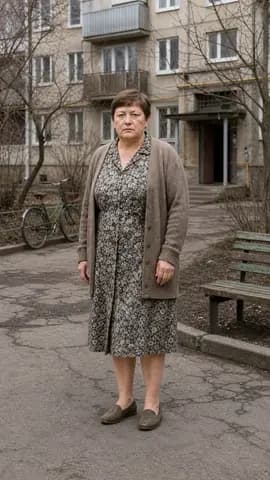
Tescha-Cheremsha functions as a supporting archetype inside the Russian TikTok Cheremsha meme. The name reflects Russian Тёща-Черемша: teshcha means a wife's mother, or mother-in-law, while cheremsha is the standard Russian word for wild garlic, also called ramsons.
In the meme world, though, Cheremsha is also the name of the shaggy lion-hare creature that appears in pseudo-Soviet AI videos, so the label can be heard both as Mother-in-Law Cheremsha and as Cheremsha's mother-in-law. That double reading suits the whole trend: ordinary Soviet-family language fused with something completely absurd.
The broader Cheremsha meme surged through Russian-language TikTok in spring 2026 and was described by multiple outlets as a parody of AI-made nostalgia for the Soviet past. Its style is recognizable at once: a solemn documentary voice, grainy retro visuals, communal-apartment or yard settings, and endlessly repeated formulas about doing everything quietly, unhurriedly, and without fuss.
The central Cheremsha is usually described as a hybrid with a lion's face and a hare's body or ears, then turned into an all-purpose Soviet household asset. In different clips it replaces insulation, transport, pillows, hats, electricity, and even political leaders.
Coverage of the trend also notes the standard human cast around the beast: Mikhailych, Petrovich, Zina, neighbors, wives, and mothers-in-law, all standing in for a deliberately overfamiliar Soviet everyday life. Within that setting, Tescha-Cheremsha is the elder who knows how things are done.
In one indexed retelling, after fiberglass is supposedly banned, people wall Cheremsha into fresh cement as insulation. During the job, the mother-in-law passes along the next Cheremsha and gives the practical instruction to bury it with the muzzle facing outward so the flat will not draft.
In another domestic variant, the mother-in-law remarks that Cheremsha warms the place and keeps insects away. A more dramatic clip identifies her directly as Cheremsha's mother-in-law: when Cheremsha collapses during a battle involving fiberglass and uranium, she steps forward, pulls a secret invention called Bardychev from her bag, and reveals that she synthesized it in 1948 in a basement.
The remedy revives Cheremsha and sends the story onward again. Elsewhere, the phrase the mother-in-law taught recurs as a setup for some bit of supposed folk wisdom, technical advice, or family truth.
Those recurring beats define the character. Tescha-Cheremsha compresses several comic types familiar across Russian popular humor: the formidable mother-in-law, the older woman with endless practical comments, the keeper of improvised household knowledge, and the elder whose authority comes from lived experience rather than office or title.
The joke is not that she behaves wildly; it is that she behaves completely normally inside a world that is wildly irrational. If a lion-hare is being cemented into a wall, she knows which way round it should face.
If the family's miracle beast falls unconscious, she already has the emergency cure in her bag. Her calm, matter-of-fact tone is what sells the surreal premise.
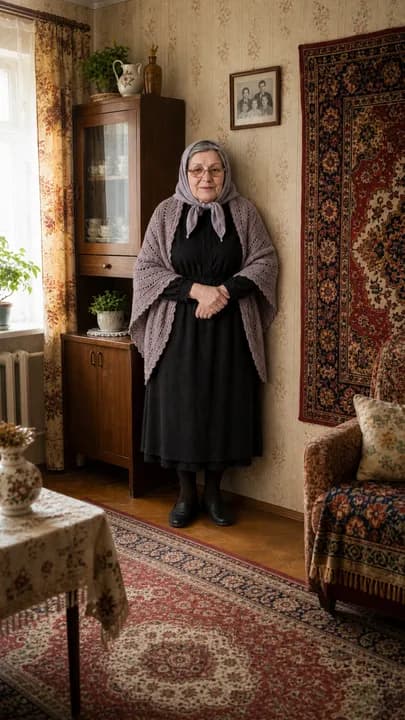
The supplied character identity reinforces that reading. Depicted as an elderly Russian woman in a headscarf, glasses, and shawl, she matches the meme's broader human look, which media summaries describe as older, worn, domestic, and closer to courtyard and kitchen life than to glossy retro fantasy.
She reads immediately as a kitchen-table authority, a communal-household veteran, and the kind of relative who can criticize, advise, help, and take over the room at the same time. That visual familiarity matters because the Cheremsha meme depends on instant recognition: viewers identify the type in a second, then laugh when that familiar type starts discussing wall insulation, household thrift, or secret 1948 inventions in a universe full of cinder blocks, fiberglass, uranium, and impossible animals.
Tescha-Cheremsha therefore occupies a clear place in the Cheremsha brainrot world. Cheremsha itself is the miracle creature and all-purpose resource; Tescha-Cheremsha is the domestic authority who explains how to use it, comments on its advantages, and stores away one more secret method for when the situation becomes ridiculous even by meme standards.
She brings the logic of the Soviet mother-in-law joke into the logic of AI-generated pseudo-Soviet absurdism, which is why the character feels instantly legible and memorable.